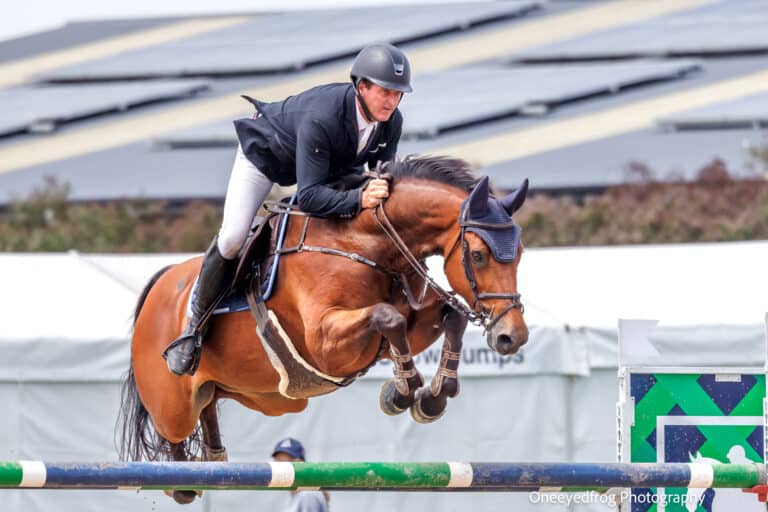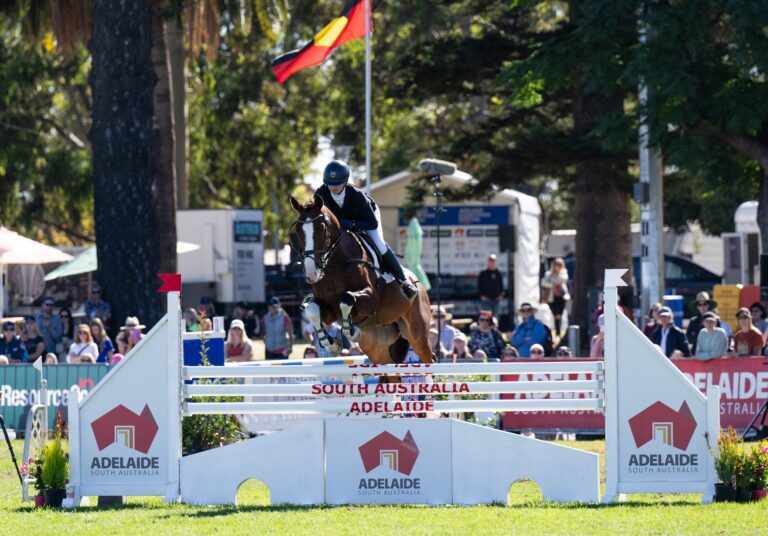


In my previous article, we explored the psychological pillars of a competition mindset: intention, focus, and the art of staying in “the now.” These are vital for any athlete. But for equestrians, there is a recurring, deeply frustrating hurdle that other sports don’t face: “I did my breathing, I visualised my round, but the second I sat in the saddle, my horse knew I was nervous and the wheels fell off.”
If you’ve felt this, you aren’t failing at sports psychology. You’re simply encountering the reality of trying to manage two nervous systems, yours and the horse’s. While it feels like our horses are mind readers, they are actually expert neurobiologists. They have evolved to pick up on chemical and neurobiological signals we don’t even know we are broadcasting. Unlike a tennis player or a gymnast, we aren’t just managing our own internal state; we are responsible for the harmony of two separate, yet biologically linked, nervous systems.
The Neurobiology of horse-rider relationships
For decades, we’ve used the phrase “sending it down the reins” to describe how a horse catches a rider’s anxiety. We used to assume this was purely mechanical—a gripping thigh, a braced hand, or shallow breathing. However, modern neuroscience reveals that the connection is far more primal and subconscious.
1. The Olfactory Link: The Scent of Fear
A 2026 study highlighted by The Guardian confirmed what horsemen have suspected for centuries: horses can literally smell our emotions. Researchers found that horses can distinguish between human chemical signals produced during joy versus fear. When exposed to human “fear sweat,” horses in the study showed immediate signs of vigilance, spiked heart rates, and avoidant behavior. They weren’t reacting to a rider’s mistake; they were reacting to the chemical “warning signal” the human was emitting.
2. Cardiac Physiological Synchrony (CPS)
Other fascinating research shows that our hearts can actually beat in sync with our horses. This is known as Cardiac Physiological Synchrony (CPS). When a rider and horse are well-bonded, their heart rate variability (HRV) begins to mirror one another. If your heart rate spikes due to a spooky corner or a high-pressure round, your horse’s heart rate is likely to follow suit. This creates a “panic party” where both nervous systems feed off each other’s stress. Conversely, if you can maintain a regulated nervous system, you act as a biological anchor, pulling their heart rate down to match yours.
The Fix: Horse-Rider Co-Regulation
In psychology, we use the term co-regulation to describe the process where one individual’s stable nervous system helps settle another’s agitated one. This is a survival mechanism. In the wild, horses rely on co-regulation to stay alive. If the lead mare stays chill and continues to graze, the herd stays chill. If she bolts, they all bolt. They don’t wait to see the predator; they simply mirror her nervous system.
When you’re in the saddle, you are the lead mare. Your horse is looking to you for a status report on the environment. If your body says “danger,” their prey-animal brain assumes there is a lion in the bushes, regardless of how many times you’ve ridden past that same flower pot.
The hardest truth for the competitive rider is that you cannot “fake it ’til you make it.” You might fool a judge with a quiet hand and a forced smile, but you cannot fool the horse’s nose or their sensitivity to your heart rate. If your “outside” doesn’t match your “inside,” the horse can become even more anxious because they sense a mismatch in their leader.
Neurobiological mental training: a bottom-up approach
To manage this, we use a “bottom-up” approach. Instead of just trying to “think positive” (top-down), we regulate the body to settle the mind. By changing your physiological state, you change the signals you send to your horse’s nervous system, creating conditions for mental calm in both you and your horse. While there are many ways to do this, here are the two examples of neurobiological strategies I use with my high-performance clients.
Strategy 1: Progressive Muscle Relaxation (PMR)
The Science: Under stress, humans enter a state of “residual tension”—a low-level contraction of the muscles that we often don’t realise is happening. This tension is felt instantly by the horse through the saddle and reins, but also affects our breathing, heart rate, and psychological state.
PMR works through reciprocal inhibition: when you voluntarily contract a muscle to its maximum, the nervous system is forced to send a powerful relaxation signal once the contraction is released. This lowers cortisol and can shift your heart rate variability (HRV) into a more stable pattern. It also builds “interoceptive awareness”—the ability to feel a gripping thigh or a locked jaw the split-second it happens, rather than minutes into a tense test.
The Strategy: The “Mini-PMR”
- Isolate: Pick a high-tension area (e.g.shoulders, jaw, glutes, or quads).
- Contrast: Inhale and squeeze that muscle as tight as possible for five seconds.
- Release: Exhale sharply and release the muscle completely. Feel the “heaviness” and blood flow return.
- Repeat: Do this 2-3 times for each key area before you mount up.
The Result: You are physically rebooting your nervous system and reducing anxiety. By moving from a peak of tension to a valley of relaxation, you create a biological “all-clear” signal to the fear centres in your brain, and in your horse’s.
Strategy 2: The 4-7-8 Breath (The Biofeedback Hack)
The Science: As mentioned above, human and horse heart rates can synchronise (CPS). While you cannot tell your heart to “slow down” by sheer will, you can control your breathing. Rhythmic, extended exhales act as a biological brake on your heart rate. By manually slowing your breath, you trigger the nervous system to lower your heart rate, which in turn settles the horse.
The Strategy: The 4-7-8 Technique
- Inhale: Quietly through your nose for a count of 4.
- Hold: Keep the breath in for a count of 7. This pause is crucial for calming the brain’s “alarm” center.
- Exhale: Forcefully through your mouth for a count of 8.
- Note: Start with 2–4 rounds. Because this changes your oxygen/carbon dioxide balance, it’s normal to feel a little lightheaded at first as your system resets! The extended exhale is the most important part—it must be longer than the inhale to activate the parasympathetic nervous system.
The Result: This is a literal “hack” of your physiology. As your heart rate stabilises, you feel calmer, your horse feels the change. You are no longer broadcasting “panic”; you are broadcasting “safety.”
The mindset takeaway
Horses are hardwired to seek security. By being a stable, regulated partner, you become the “safe harbor” they need in a high-pressure environment. Knowing that your horse mirrors you shouldn’t be a source of guilt or added pressure—it’s actually a superpower!
It means you have a “neurobiological dial” in your direct control. You can’t control the wind, the crowd, or the scary jump, but you can control your own muscle tension and breath. When you turn your own dial down to “calm,” you give your horse the best possible chance to do the same.
Tailored strategies for riders
While the science of neurobiology is universal, the application is personal. Every horse-and-rider pair has a unique “chemistry,” which is why I love working with riders to find the specific blend of tools that works for their system. Just like training a horse, mental skills take trial, error, and a bit of expert guidance. But the goal is the same: to move from a state of “co-agitation” to a state of “co-regulation,” where both of you can actually enjoy the sport you’ve worked so hard to master.
About Denna Cooper
Deena is a registered Performance Psychologist (AHPRA) with a unique edge: she is an active competitive rider who understands the saddle as well as she understands the science.
She’s been through the journey from performance anxiety to confidence herself, and she combines that “in the saddle” experience with evidence-based science. Her work focuses on the cognitive and emotional frameworks required for peak performance, helping equestrians conquer nerves, recover confidence after setbacks, and build the “mental muscle” necessary to excel under pressure.
Based in Australia, Deena works with riders globally via Telehealth, offering 1:1 coaching and group sessions, as well as in-person workshops designed to turn anxiety into your competitive advantage.
Learn more about mastering the mental game with Deena Cooper – Equestrian Performance Psychologist and follow @deenacooperpsych