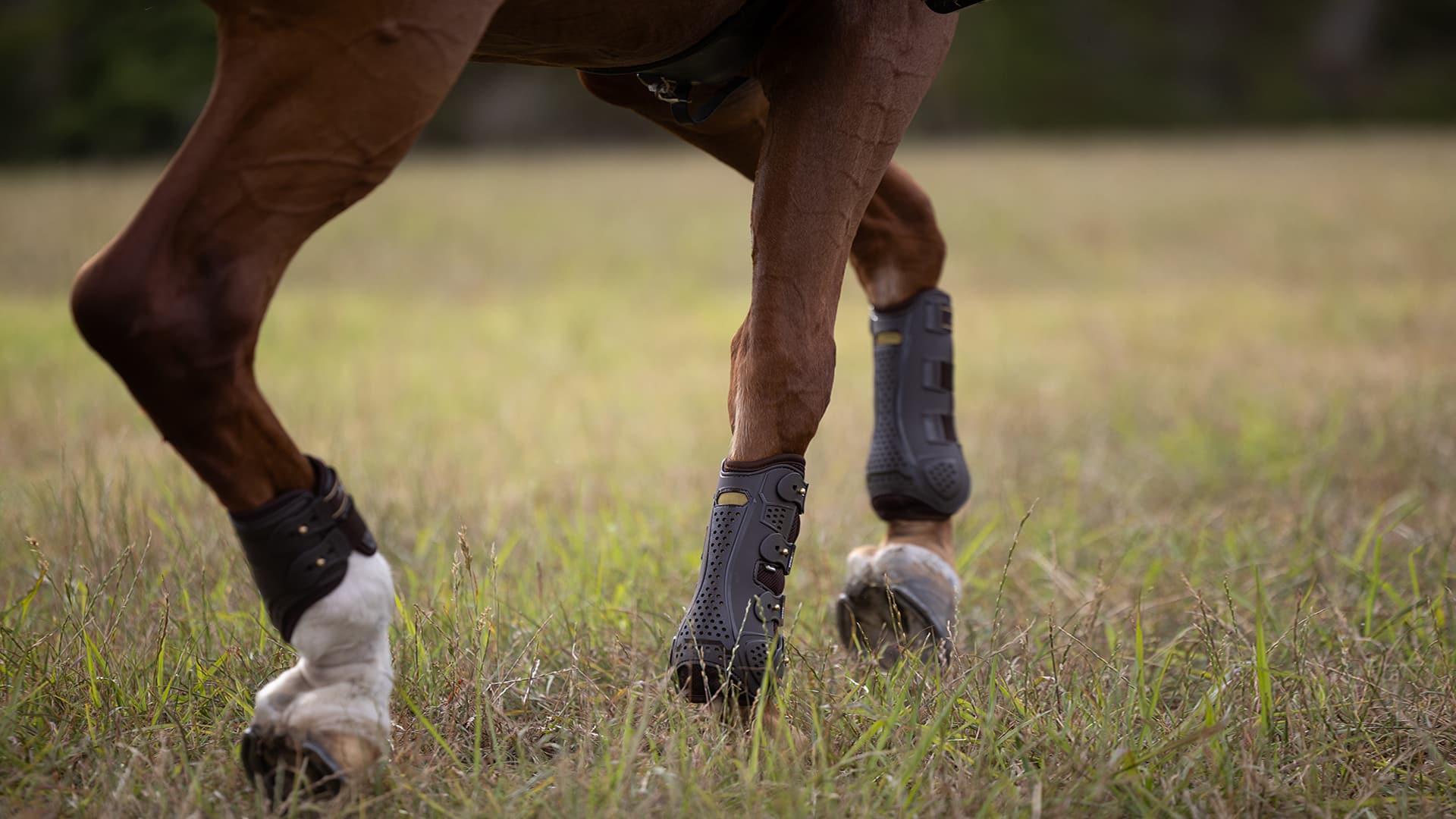
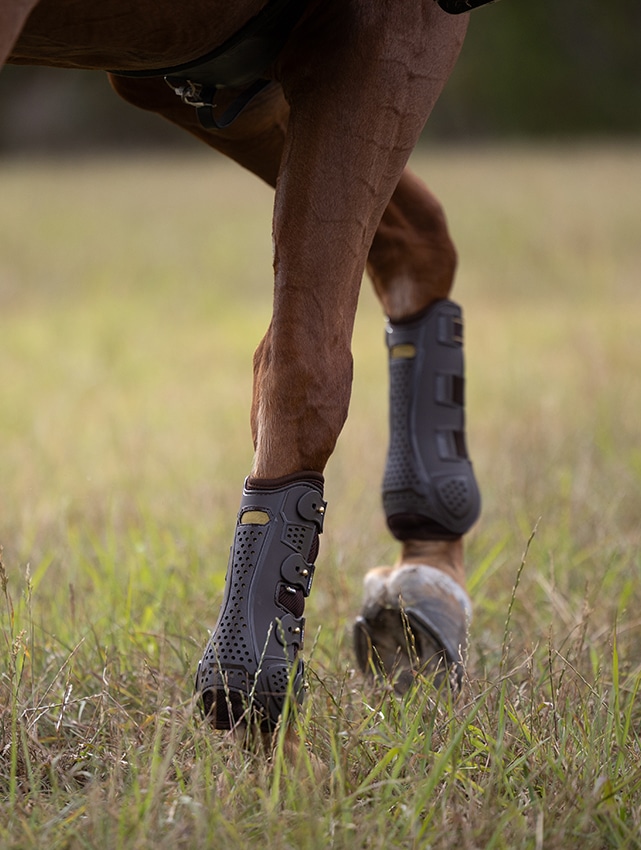
Airstride Halo Hybrid and Fetlock Boots.


Protecting our horses’ legs has long been considered a mark of good horsemanship. Boots and bandages are widely used to reduce the risk of knocks, interference injuries, and accidental strikes during exercise – and rightly so. Leg protection plays an important role in safeguarding the lower limb and reducing the risk of external trauma during work.
However, as with any piece of equipment, how that protection is delivered matters. While boots are designed to shield the leg from impact, not all designs and materials perform in the same way once the horse starts moving. Some forms of protection can unintentionally change the environment around the lower limb, particularly in relation to heat and moisture.
Riders select leg protection with the best of intentions: to care for their horses, support performance, and prioritise long-term welfare. What’s less widely understood is that certain traditional materials and constructions can trap heat against the lower leg during exercise, creating a thermal load that isn’t immediately visible from the outside.
The equine lower limb is uniquely vulnerable to heat. Below the knee and hock there is very little muscle and minimal blood flow, meaning the limb cannot rely on circulation to cool itself efficiently. Instead, it depends heavily on airflow (convection cooling) to dissipate exercise-generated heat. When that natural cooling mechanism is restricted by non-breathable materials, heat can build up placing additional stress on tendons and surrounding soft tissue.
As research into equine physiology has progressed, it has become increasingly clear that not all protection is equal. The question is not whether we should protect our horses’ legs, but whether we can do so while also supporting the limb’s natural ability to regulate temperature.
Can we protect our horses’ legs and help keep them cooler at the same time? That question is what led to the foundation of Airstride.
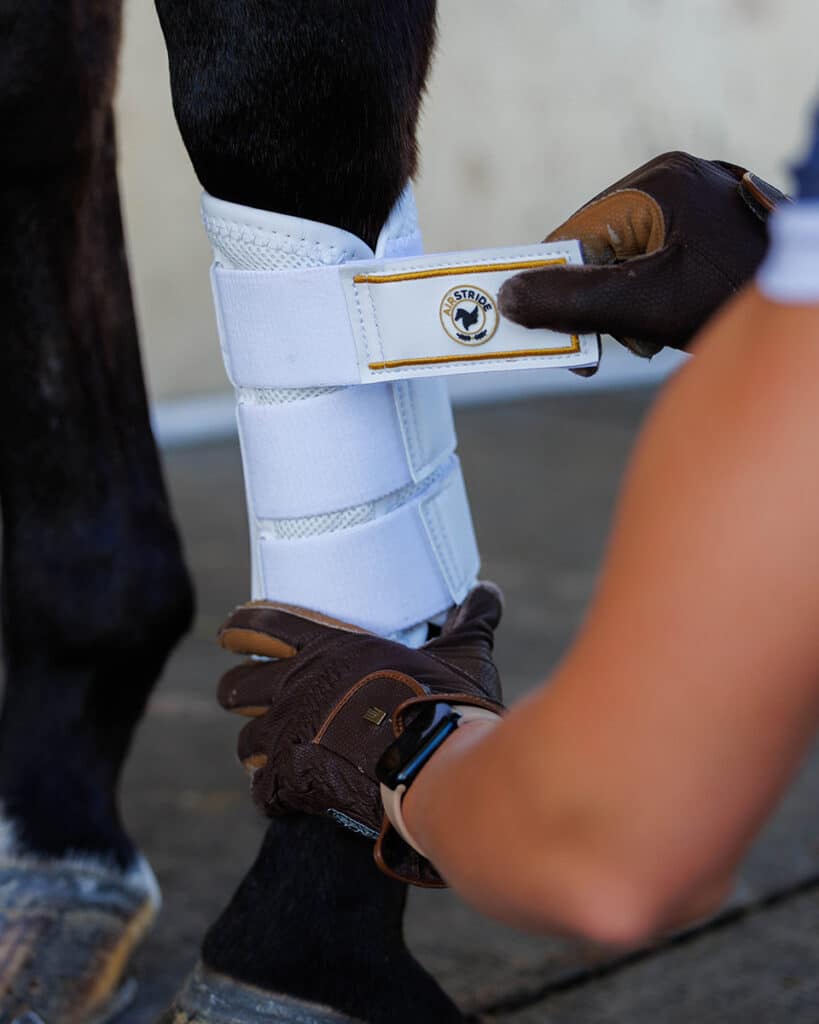
Airstride is rethinking leg wear through science, airflow, and equine welfare; pictured is the Airstride Original Boots.
WHY HEAT EXPOSURE MATTERS
During exercise, horses generate substantial internal heat as a result of muscle contraction and energy metabolism. While muscle tissue benefits from a rich blood supply that assists with heat dissipation, equine tendons have a relatively poor blood supply, so they cannot dissipate heat quickly through blood flow. Instead, the surface of the limb requires convection cooling to keep the tendon from overheating.
Studies of equine tendon microdamage and biothermal loading continue to reference internal tendon temperatures reaching approximately 43 – 45°C (109.4 – 113°F) during high-intensity exercise (O’Brien et al., 2021; originally measured by Wilson & Goodship,1994). This represents what appears to be a relatively small increase above normal equine body temperature, which typically sits around 37.5 – 38.5°C (99.5 – 101.3°F). However, earlier laboratory work helps illustrate the scale of this vulnerability by demonstrating that tendon cell viability declines rapidly once temperatures exceed the mid-40°C range (113°F) (Birch et al., 1997).
This highlights how narrow the margin is between normal physiological function and cellular stress.
Taken together, the evidence suggests that tendon tissue operates within a very narrow thermal tolerance and researchers believe that chronic overheating could be one factor predisposing horses to tendon injuries down the line (Wilson & Goodship, 1994; Brock, 2021, Smith et al., 2002).
“This highlights how
narrow the margin is…”
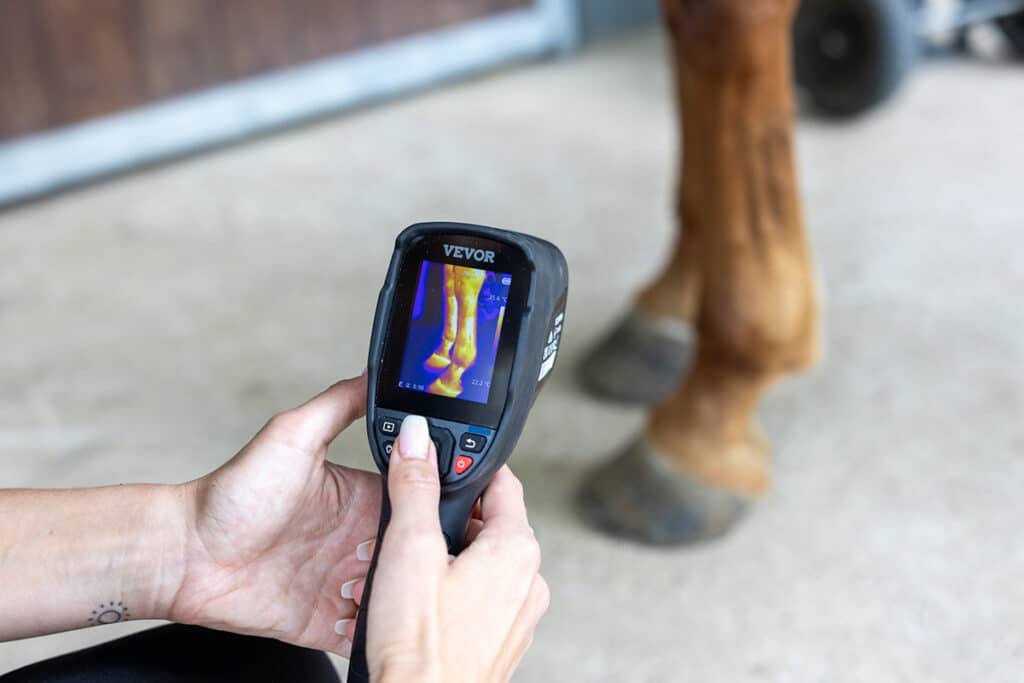
Airstride thermal temperature analysis.
THE PROBLEM AIRSTRIDE SETS TO ADDRESS
Airstride was founded in Sydney during the COVID lockdowns by Jessica Dobrow, whose background spans the medical industry and textiles. What began as a welfare question evolved into a deeper examination of whether commonly used leg protection genuinely aligns with what research tells us about heat and equine anatomy.
Protective boots are designed to shield the leg from impact, but they also influence how heat and moisture behave around the limb. Many traditional boots rely on neoprene, fleece linings, rubber and foam. While effective for cushioning, these materials are also inherently insulating.
Scientific studies have validated these overheating concerns. For example, Solheim et al. (2017) measured significantly higher skin temperatures on legs protected by common wraps or boots compared to bare legs.
Horses wearing fleece bandage wraps experienced the greatest temperature rise, averaging around 16°C (29°F) higher under the wrap, whereas an uncovered leg in the same exercise saw only about a 3°C (6°F) increase. Tendon boots (including neoprene-lined types) caused roughly 12 – 14°C (21.6-25.2°F) increases in skin temperature (Solheim et al., 2017).
Brock et al. (2021) monitored skin temperatures on horses’ legs during moderate work at walk, trot, and canter. Bare legs cooled slightly during exercise, dropping to around 27°C (80.6°F) due to natural airflow. In contrast, legs under common boots and wraps heated up to approximately 35 – 36°C (95 – 97°F). That’s an 8 – 9°C (15 – 17°F) difference directly attributed to the leg covering.
While skin temperature is lower than internal tendon temperature, these surface increases are significant as they reflect a reduced ability for heat to be released from the lower leg. When considered alongside research showing that tendon cells begin to experience stress at temperatures only a few degrees above normal body temperature, these findings help explain why repeated heat accumulation under boots may matter more than equestrians realise.
Importantly, these increases occurred under conditions reflective of normal riding, using standard products readily available on the market.
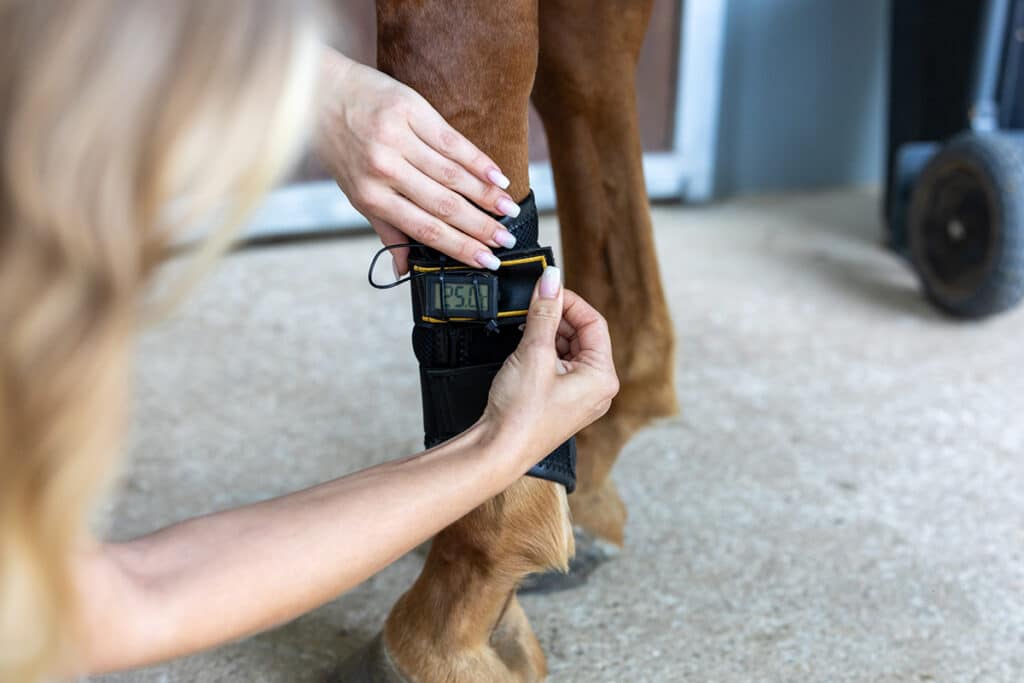
Airstride temperature sensor assessment.
FABRICS: MARKETING VERSUS WHAT ACTUALLY COOLS
As awareness around heat has grown, so too have marketing claims around “cooling” or “breathable” boots. Applying material logic helps clarify whether the boot actually performs how it’s advertised.
Neoprene, for example, is widely used for its cushioning and waterproof properties, but it’s also engineered to retain heat. Its most common application is wetsuits, where it’s specifically used to reduce heat loss and keep the wearer warm in cold water.
Fleece linings function in a similar way, though natural fleece is generally absorbent of moisture. Fleece traps air, which is precisely what makes it warm. While soft against the skin and good for sensitive horses, it offers little support for heat dissipation during exercise when paired with a fabric that isn’t breathable on top.
Some designs also incorporate silicone or synthetic rubber components. While these materials may offer durability or grip, they are also thermal insulators.
Perforations in the material can reduce overall coverage, but they do not change the insulating nature of the material where it remains in direct contact with the skin.
The key takeaway is that equestrians are NOT making the “wrong” choices. Most are simply selecting from what the market has historically offered. Rather, it highlights why terms such as “cooling” or “breathable” should be interpreted by taking into account airflow, evaporation, and material behaviour, rather than appearance or marketing alone.
EVIDENCE-LED DESIGN IN PRACTICE
Airstride’s airflow-first philosophy has been examined through both comparative assessments and independent evaluation, with consistent findings across testing environments.
In Airstride’s most recent Comparative Cooling Assessment, multiple boots marketed as “breathable” were tested under the same mild riding conditions (approximately 18°C ambient temperature (64.4°F). From resting ambient skin temperatures of approximately 31°C (87.8°F), the two “breathable” boots demonstrated clear heat retention, reaching 35.8°C (96.4°F) and 36.0°C (96.8°F) on the leg surface immediately following exercise.
By contrast, Airstride Original and PRO boots showed a reduction in surface temperature during work, rather than an increase. From resting measurements of approximately 31.0°C (87.8°F) and 30.9°C (87.6°F), leg surface temperatures dropped to 25.7°C and 26.0°C (78.2°F and 78.8°F) respectively immediately after exercise. This reduction during movement is consistent with true convection cooling, where airflow actively releases heat rather than trapping warmth against the limb. You can read about the study here.
Independent research has helped contextualise these findings further. In testing conducted by Canadian biologist Elisa Walfish (MSc. Biology), Airstride boots reached a maximum surface temperature of approximately 30°C (86°F), compared with a 38°C (100.4°F) peak under a fleece wrap and the closest competitor to Airstride was at 34°C (93.2°F) with a traditionally constructed boot. Walfish described Airstride as “an amazing product with almost no heat accumulation at all”, reinforcing the principle that airflow-enabled designs using appropriate materials can meaningfully limit heat build-up during real riding scenarios. Taken together, these results align closely with published research demonstrating that insulating materials and restricted airflow contribute to elevated limb temperatures, while designs that prioritise airflow support more effective heat dissipation (Westermann et al., 2014; Solheim, 2017).
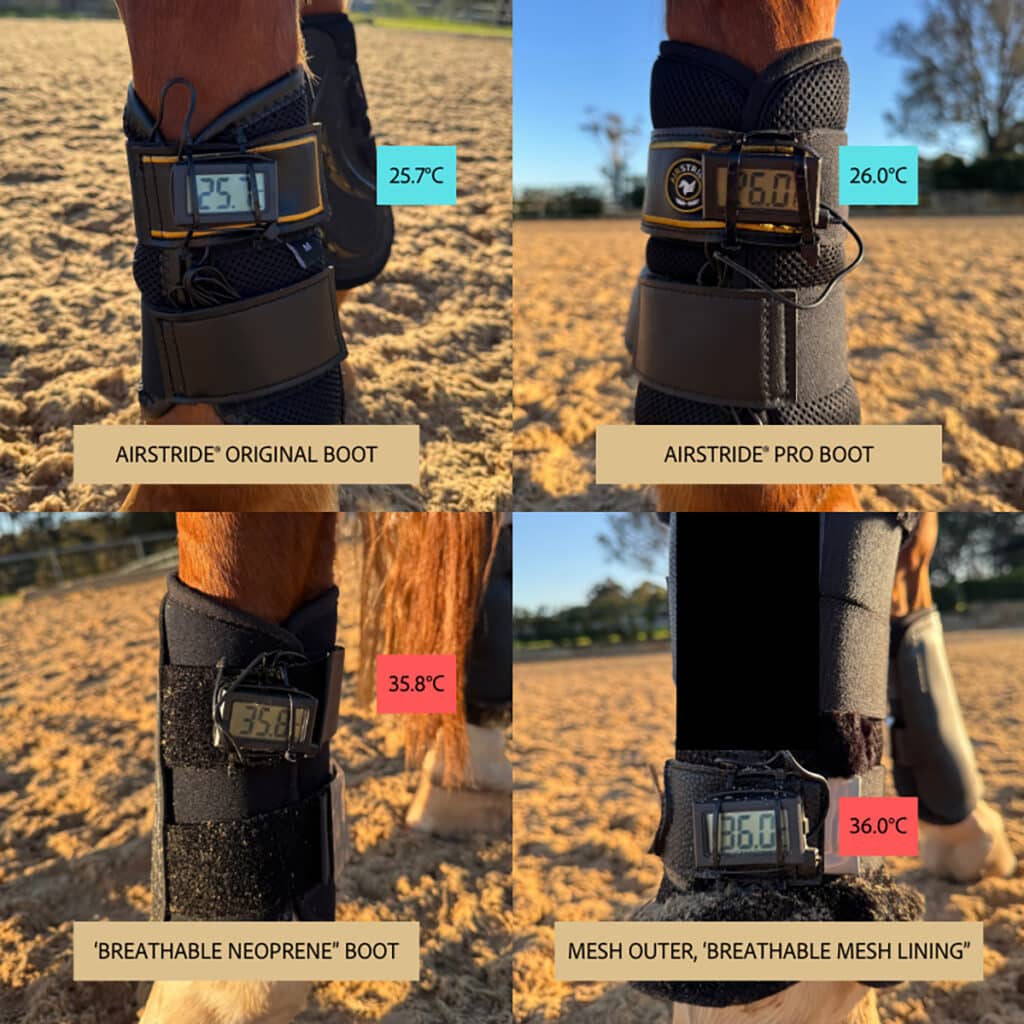
Airstride comparative analysis, immediately after 30 minutes of light exercise.
VETERINARY COLLABORATION & REAL-WORLD VALIDATION
Industry professionals have been integral to refining this approach. Airstride has worked closely with equine veterinarians and performance professionals in Australia and the USA throughout development, ensuring that design choices were grounded not only in material science, but also in real-world clinical and training scenarios.
Dr. Sally Rizzuto, equine veterinarian and FEI rider based in Sydney, incorporates Airstride boots into her heat management approach.
“As a vet, I’m always looking for products that truly support the health and long-term soundness of the horses I work with. What sets Airstride apart is the genuine cooling they provide, which is critical in preventing damage from overheating. I’ve seen firsthand how well they regulate leg temperature, even on the hottest days.”
“The team at Airstride have carefully considered lower-limb anatomy, with ventilation positioned around key structures such as the superficial digital flexor tendon, deep digital flexor tendon, and suspensory ligaments. That attention to crucial anatomy gives me confidence in how these boots perform during work, particularly in injury management or rehabilitation settings.”
Beyond testing, Airstride boots are used in professional barns across Australia, New Zealand, the United States, Canada, and Europe, and seen on the world stage in international competition. Their adoption reflects a broader shift within the sport toward evidence driven and welfare led equipment choices.
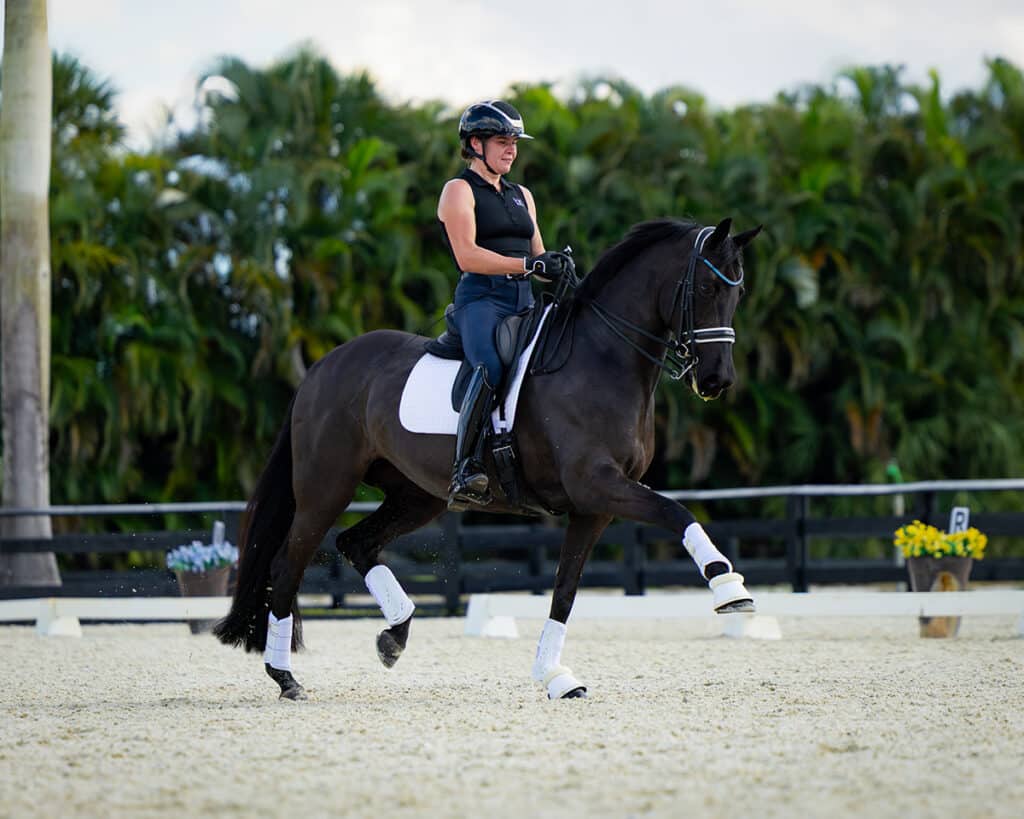
Airstride in Florida: Callie O’Connell of Berryfield Farm Dressage.
MAKING INFORMED CHOICES AS EQUESTRIANS
For equestrians at every level, understanding how leg wear influences heat is becoming essential. When selecting boots, asking the following questions can help cut through marketing claims:
- What materials sit directly against the lower leg?
- Does the material insulate or allow moisture evaporation?
- Does the design facilitate air flow (convection cooling) during movement?
- Is “breathable” supported by logic, not just marketing?
By applying basic principles of material science and physiology, equestrians can make more informed decisions that support long-term soundness as well as protection.
Protective boots remain essential for managing interference and impact during work. But as science continues to inform best practice, how those boots are designed matters more than ever.
By integrating scientific research, veterinary knowledge, and real-world testing, Airstride Equine represents a new standard in leg wear, one that recognises protection and cooling as equally important for long-term equine welfare.
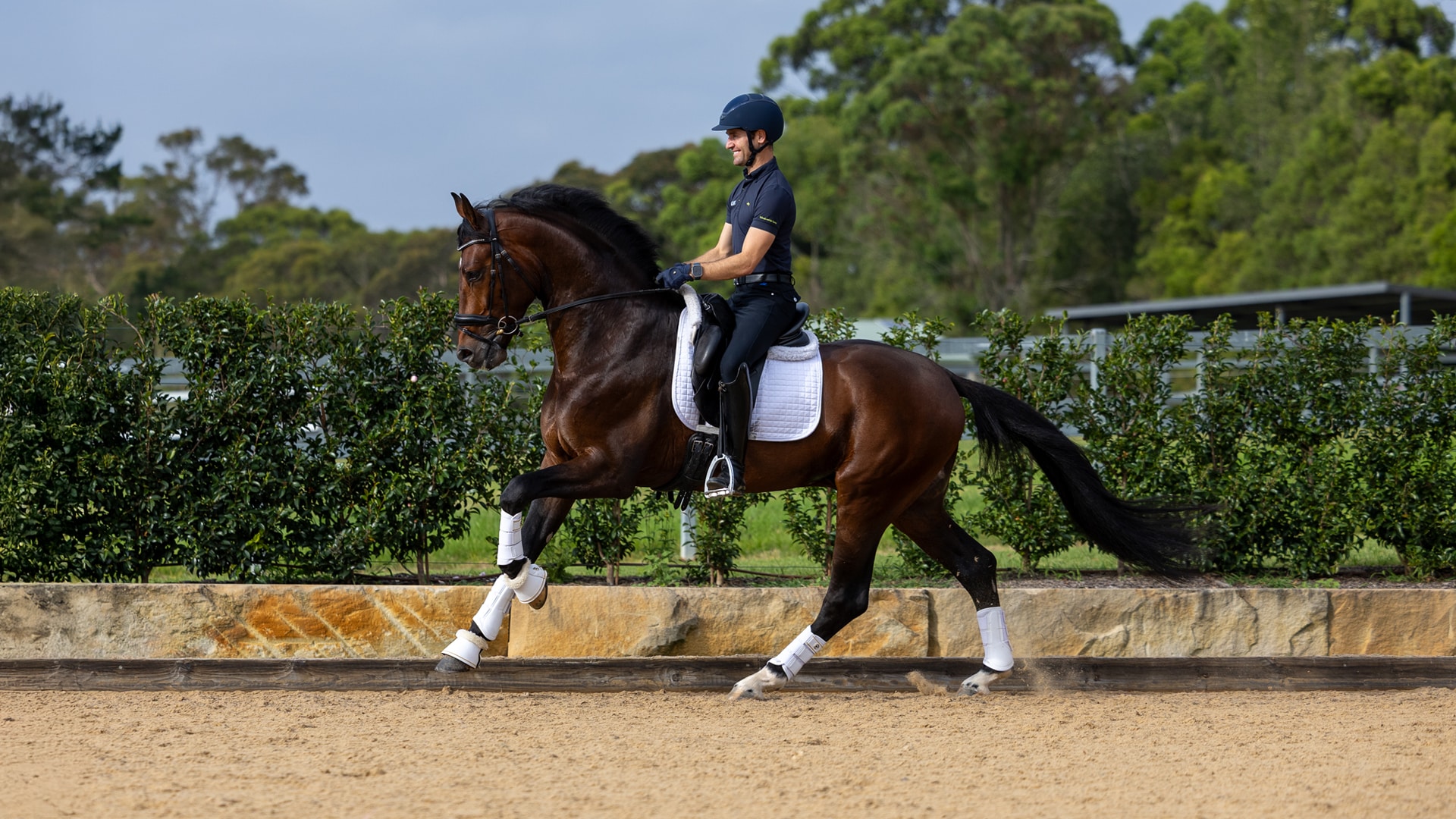
Airstride in Sydney: John Thompson from Mulawa Performance.

Airstride is rethinking leg wear through science, airflow, and equine welfare. To learn more, visit www.airstrideequine.com.
This article was written in conjunction with Airstride. EQ
Related articles
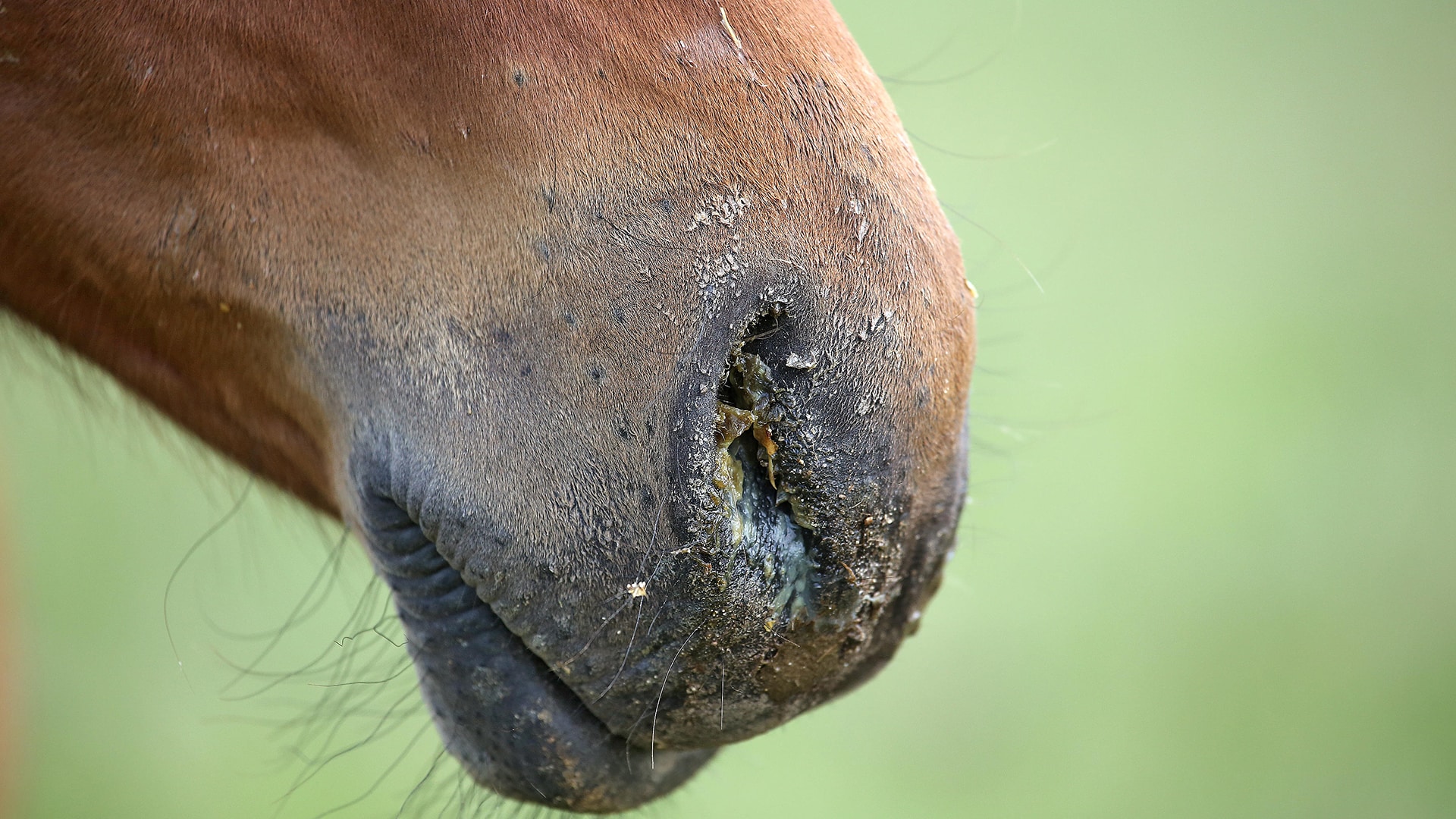
A common statement often used is “my horse has a virus”, but what does this really mean? Horses, like people, can contract a viral infection, and there are hundreds of different viruses around that can infect animals. But often it’s a case of a virus being blamed for any illness or malaise that can’t be diagnosed at the time. So why is “the virus” blamed?
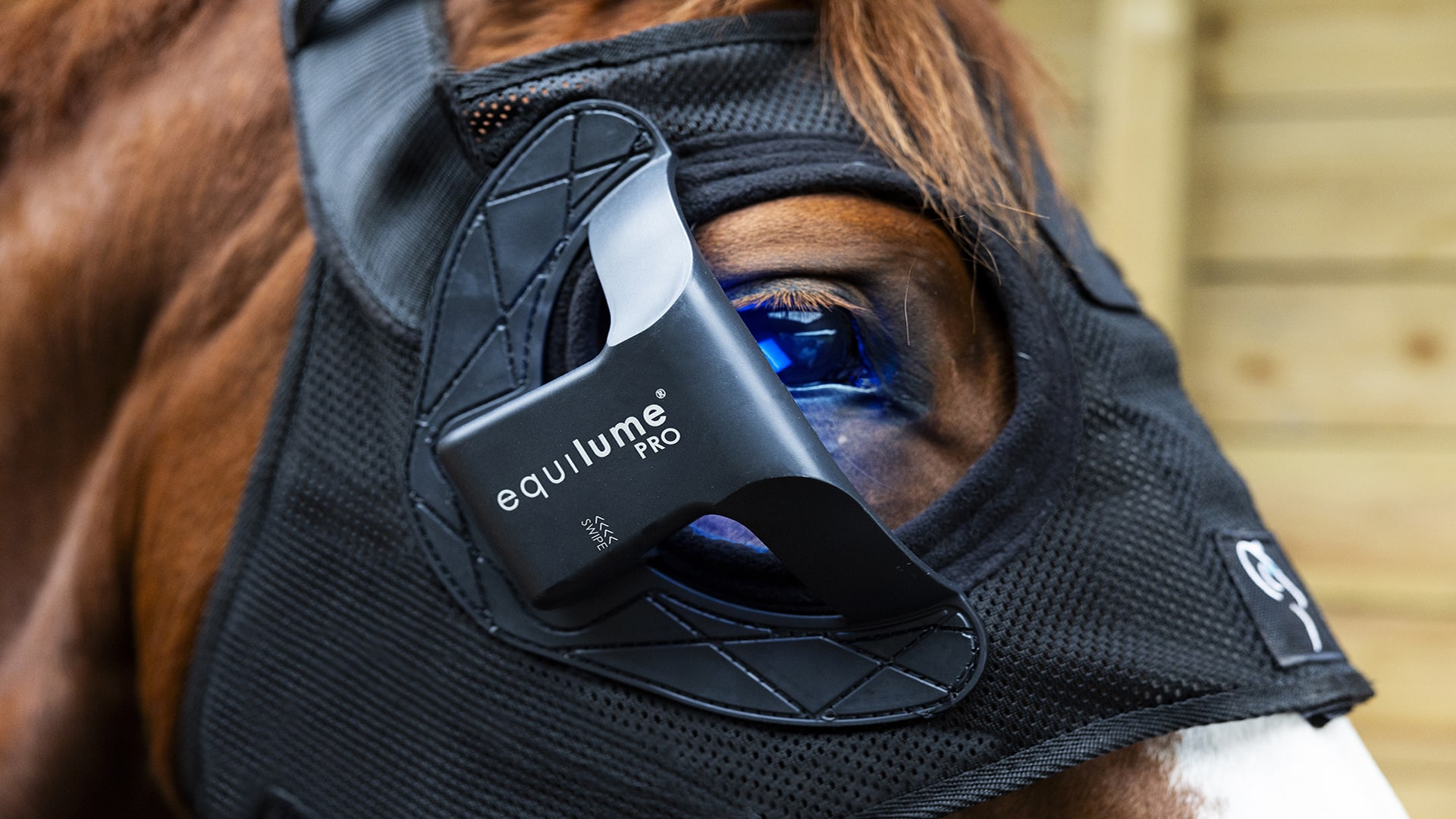
If you’re a horse owner, you already know how much your horse’s comfort and health depend on the seasons. Changes in daylight can affect everything from hair coat shedding to energy levels and appetite. For some horses, especially those dealing with PPID (Pituitary Pars Intermedia Dysfunction, also known as Cushing’s disease) or seasonal Headshaking Syndrome, these seasonal shifts can make symptoms worse.